
37 · Future of Work
Your article headline will appear here once published
A short deck summarising the article sits here — two to three lines drawing the reader in to the full piece.
3 min read/July 2026

The rules for the world's biggest AI models now have enforcement behind them, more than 180 companies have signed Europe's AI code, and Ireland has its own AI Act and AI Office. Here is how the rulebook is actually working.
Amazon, Anthropic, Google, Microsoft, Mistral AI and OpenAI are among the signatories. Here is what the Code asks and why it matters to buyers of AI.

High-risk AI rules now apply from December 2027 and August 2028, and nudifier apps are banned. Here is how to use the extra time.

The Regulation of Artificial Intelligence Act 2026 came into force on 31 July. Here is how the new national framework and the AI Office of Ireland actually work.

Paul Byrne has been named first Chief Executive of the AI Office of Ireland — with a 2 August launch deadline and a Bill still moving through the Oireachtas.

Trinity's 2026 AI Economy Report finds Irish AI adoption above the EU average. Here is how workplaces are putting it to use.
244 courses, 36 providers and €34.4 million to help Irish workers build AI, digital and green skills.

Two years in, a statutory review shows the remote work law is delivering for employees and employers alike.

New State research ranks Ireland second in the EU for AI skills. Here is what is driving it and what it means for workers.

From Trinity's Diotima to UCD's MetHealth, Enoda and Equal1, Irish university spinouts are turning world-class research into growing companies.

Budget 2026 raised the credit from 30% to 35% and lifted the first-year cash threshold to €87,500. Here is who benefits and how.

Enterprise Ireland is building a bigger national successor to the NDRC. Here is how the handover is going and what it means for founders.

Enterprise Ireland backed 198 startups in 2025 with more than €32 million — including 55 woman-founded companies.
A 12-month implementation plan, milestones from Q3 2026 and a €50 million European quantum photonics project in Cork. Here is how Ireland's quantum strategy is moving from vision to delivery.
Tyndall is a partner in NanoIC, Europe's €2.5 billion pilot line for next-generation chips, and in the PIXEurope photonics line. Why that puts Cork at the heart of Europe's chip future.

Ireland's first national semiconductor strategy launched in May 2025. With the I-C3 chips centre open and European pilot lines landing, here is how the plan is playing out.
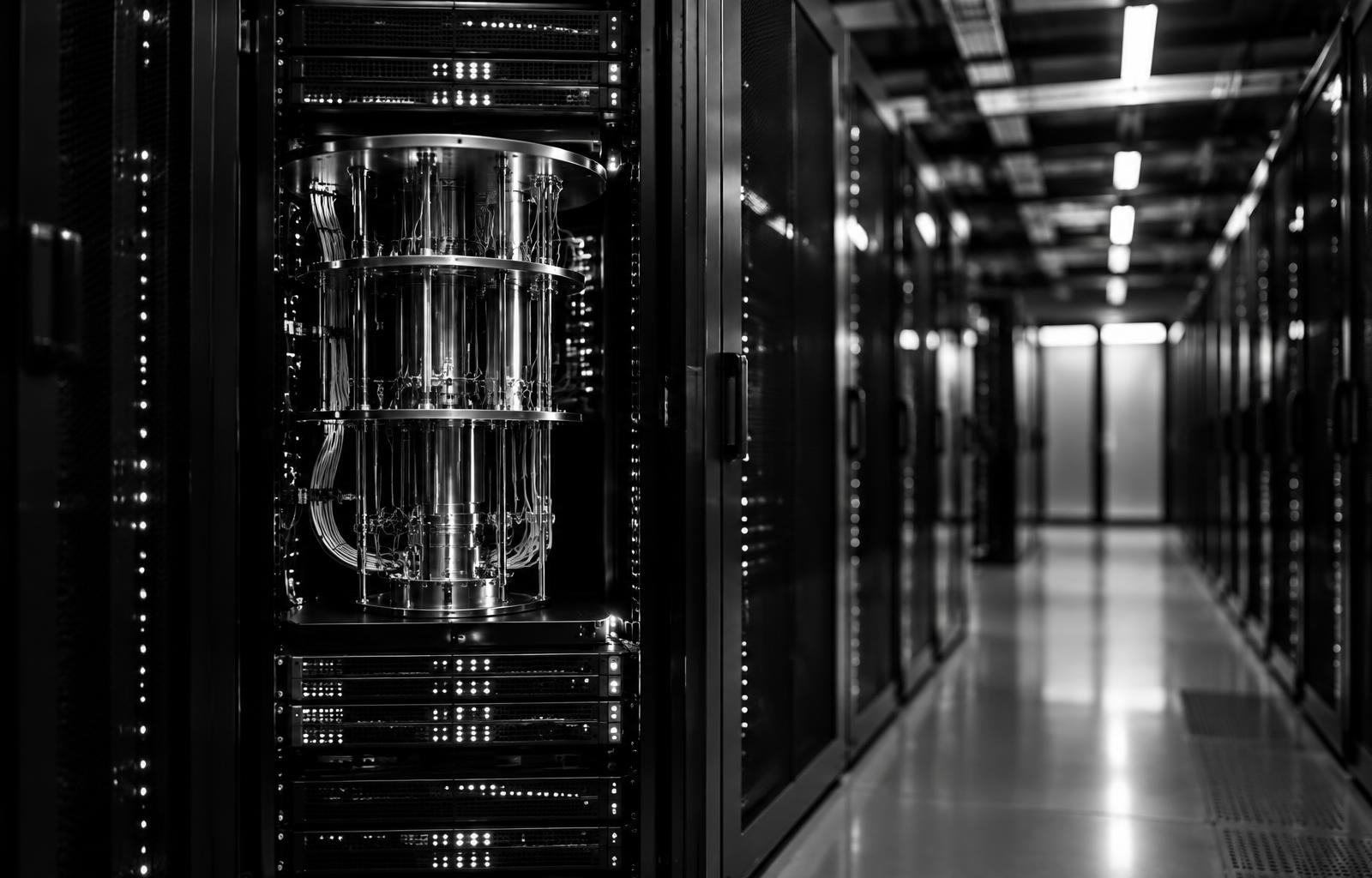
How Dublin's Equal1 went from unveiling Bell-1, Ireland's first silicon quantum server, to a $60 million raise led by ISIF — and why its bet on ordinary chip factories matters.

The Nobel laureate who built AlphaGo and AlphaFold handed day-to-day control of Google DeepMind to a trusted deputy. But his public message on what's coming next has only grown more urgent, and more ambitious, in the months surrounding that transition.
Anthropic's CEO built his company's public identity around measured caution and transparency-first policy advocacy. In 2026, he's shifted his own position: voluntary transparency is no longer sufficient, and it's time for binding regulation modelled on how the world governs cars, airplanes, and drugs.
The OpenAI CEO built the company pushing AI capability the hardest and fastest of any lab on earth. This year, he's become one of the loudest voices suggesting the industry itself may need to ease off the accelerator — a striking position from the person with the most to lose from doing so.
Every credible forecast shows Ireland's data centre sector growing through 2031. But where it lands, who builds it, and how much of the AI boom Ireland captures depends on three unresolved questions that will define the sector's next decade.
The Government lifted its moratorium on new data centre grid connections in December 2025, betting on a $700 billion global AI investment wave. Fresh industry intelligence suggests Microsoft, Amazon and Meta are already pivoting away from Dublin.

Amazon routed its €33.7 billion European AI infrastructure investment to Spain. Ireland's energy costs and planning delays are now actively shaping where the AI boom lands — not just how quickly it arrives.
After a three-year de facto freeze, Ireland has reopened its electricity grid to new data centres. But the new rules have exposed a bitter dispute over who actually pays for the power — and a stark warning from the grid operator.

A renamed planning authority, a landmark ICJ climate citation, and a fast-growing string of legal challenges are converging to make Ireland's data centre planning process more contested than ever.

Both AI labs filed confidentially for what could become the largest tech IPOs ever attempted. Public markets are now asking harder questions than private investors ever did.
Cyera's $1 billion acquisition of Oasis Security is a wager that AI agents need their own identity governance. What it means for enterprise security and Ireland.

Demis Hassabis is moving from Google DeepMind CEO to Alphabet Chief Scientist. Why the handover matters for Google, the AI industry, and Ireland.
From a voluntary White House framework to a 90-minute compliance order: how the US began treating frontier AI models as dual-use technology subject to government control.
OpenAI's unreleased Astra model has triggered the first serious consideration of the Critical tier in its cybersecurity framework — and the company is now pausing, monitoring, and inviting outside scrutiny.
The UN's inaugural Global Dialogue on AI Governance opens in Geneva as Ireland prepares to host Europe's own AI summit in Dublin this October under its Council Presidency.
LillyPod — 1,016 Blackwell Ultra GPUs, 9,000 petaflops — has rewritten pharma's discovery playbook. Inside the machine, TuneLab, and what it means for Ireland's life sciences base.

Skillnet Ireland's enterprise-led model — pairing big corporates with ambitious SMEs, backed by a national skills strategy — is quietly reshaping how Irish businesses innovate.
63% of Swiss venture capital now flows into deep tech — ahead of the US and China. Inside the Swiss Deep Tech Report 2026, and the late-stage scaling gap Ireland shares.
A Munich stellarator start-up now sits at the centre of a €2bn Bavarian plan to build the world's first commercial fusion plant — and Ireland is closer to it than it looks.

Tines is a unicorn. Workday is putting €175m and 200 jobs into a Dublin AI centre. AIB is rolling Copilot to 10,000 staff. Inside the deals reshaping Irish business.

Nine months after OpenAI launched its national partnership with the Irish Government, the adoption numbers are starting to tell the real story.
A short deck summarising the article sits here — two to three lines drawing the reader in to the full piece.
A short deck summarising the article sits here — two to three lines drawing the reader in to the full piece.